Knitting for Olive Was Sold. Should Knitters Worry?
Earlier this month a family yarn company in Copenhagen posted on Instagram, and half the knitters I follow clutched their mohair.
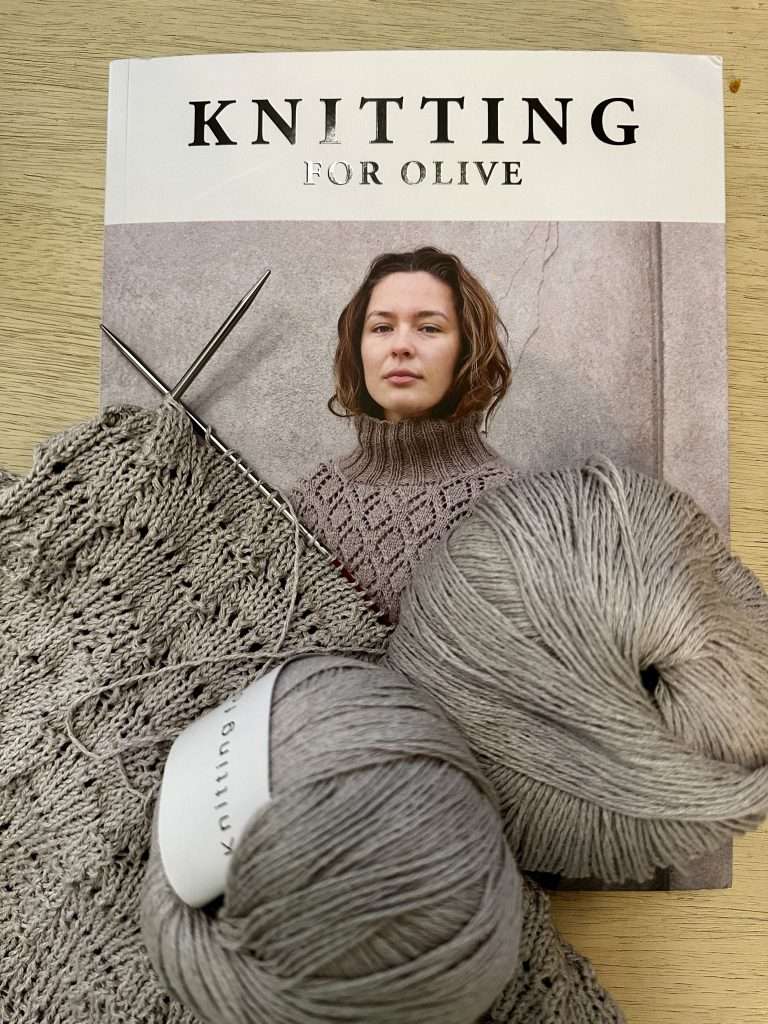
Knitting for Olive is one of my favorite yarns. My very first project with it was a cardigan in Dusty Artichoke, and I still remember that first squish.
I bought the book too. As a vegetarian and an environmentalist, I loved what they stood for. There’s a section in there explaining how their silk is harvested without harming the silkworms. It meant a lot that they took the time to explain it.
And the price. Higher-end yarn that a regular knitter could actually afford. That’s a big part of why I trusted them.
My first reaction was a little stomach drop. My second was, okay, but what does that actually mean?
Finance is not my department. So I went and found out, and here’s the plain-English version.
What actually happened
On October 2, Knitting for Olive announced on Instagram that it had been bought by Hawk Infinity, a holding company based in Oslo, Norway.
Hawk’s own portfolio page lists the deal as closing September 30, 2026, with 100% ownership. Some early write-ups called it a majority stake, so if you see two different numbers floating around, that’s why. Hawk’s page is the most direct source.
The family says they’re staying on to run the business, and that nothing is changing.
Quick backstory if you’re newer to them. Pernille and her daughter Caroline started in 2015, selling baby and toddler patterns after Caroline’s second baby was born. The name came from the nickname the family used for a grandbaby before she arrived. Their first yarn, Merino, came in 2016. Adult patterns followed in 2018, and Pernille’s son Alexander joined in 2022.
Today there are seven Knitting for Olive yarns, including Soft Silk Mohair, Pure Silk, and No Waste Wool. Their whole pitch has been natural fibers and respect for the animals and people behind them. That’s exactly why this news hit knitters in the gut.
Private equity, explained like a yarn swap
A private equity firm runs a fund. It collects money from investors like pension funds and wealthy families. Then it buys companies, often with borrowed money on top.
Then comes the part that makes knitters nervous. The firm tries to make the company more profitable, and it usually plans to sell it within about three to seven years for more than it paid. The profit goes back to the investors.
Think of it as buying a skein at one swap so you can sell it for more at the next one. The clock is always running. That flip where the fear comes from. When there’s a sell-by date, the pressure is to grow profit fast. The moves people tend to worry about:
- Prices creeping up
- Cheaper fiber or new suppliers
- Fewer staff doing more work
- Growing faster than the quality can keep up
Not every deal goes that way. But knitters have seen enough beloved brands change hands to be wary.
And this isn’t new for yarn. Back in 2020, the hand-knitting yarn business behind Rowan and Patons was sold to DMC Group, which is owned by a private equity firm. Big money has been in the yarn aisle for a while.
So is Hawk Infinity private equity?
Depends who you ask, and both sides have a point.
What Hawk says. Hawk calls itself a long-term home for founder-led businesses, and says it’s owned by founders instead of a fund. Its website says it has no plans to cut costs or ever sell a company again. Its tagline is “New owner, better life.”
The model goes like this. Buy businesses that already make steady money. Use the extra cash to buy more. Hawk says this has returned roughly 40% a year to its shareholders over many years.
No sell-by date is a real difference from a classic private equity fund. On paper, there’s no clock.
What the skeptics say. Aly Milich, a knitter who spent years as a private equity investor, wrote on her Substack that she doesn’t believe nothing will change. Her argument is that a holding company is still a type of private equity. It still answers to shareholders who expect a return.
My two cents. Both can be true at once. No exit clock matters. So does the fact that 40% a year is a big number to keep feeding.
One more thing. Hawk buys a lot of companies, about 20 in 2026 alone, and most of them are software and IT businesses. Knitting for Olive is the only yarn company on the list. The closest neighbors are a potato chip maker in Norway and a print-on-demand shop in the UK.
That cuts both ways. Software people probably won’t meddle with colorways. They also aren’t yarn people.
Why would a family sell?
We don’t know their reasons, and honestly, it’s their business. Literally.
But small brands sell for a handful of pretty human reasons. After ten years of carrying all the risk, getting paid for it is tempting. Running a growing company is exhausting, and handing someone else the payroll and the spreadsheets means more time for the fun part.
Hawk’s whole pitch to founders is giving them their freedom back. If you’ve ever stayed up until 1am answering customer emails for your Etsy shop, you understand the appeal.
Whatever the reasons, the proof will be in the next skein.
What to watch for as a knitter
Keeping an eye on this takes a yarn label and a decent memory. Or a photo of the label, because we all know about the memory.
- The fiber and sourcing on the label. Knitting for Olive’s Merino is non-mulesed and traceable back to the farm. If that wording quietly changes or disappears, pay attention.
- Price per skein. Yarn prices go up everywhere. A sudden jump across the whole line is a different story. Good yarn at a fair price is what made this brand special, so this is the one I’m watching hardest.
- The patterns. Do new releases still feel like Pernille and Caroline, or do they start to feel like a trend report?
- The family’s faces. Are they still on Instagram and still answering comments?
- Your local yarn shop. If the shops that carry it start dropping it or complaining about it, they usually know first.
Take a photo of a label you own right now. Six months from now, you’ll have something to compare.
So, should we worry?
Not yet. Watch.
The yarn on the shelf this week is the same yarn it was last week. Any changes will show up slowly, one label and one price tag at a time.
For me, as long as the yarn is still ethically sourced and the prices remain reasonable, nothing changes.
My Dusty Artichoke cardigan doesn’t know who owns the company now. I just want the next skein to feel exactly like that first squish.
Did this news change how you feel about buying Knitting for Olive? Tell me in the comments.